


Pharmacists in Canada earn well above the national median, with hourly wages ranging from $40 to $67 depending on region and career stage.
Provincial differences are significant, with Quebec and Yukon posting notably higher median rates than the national figure. As pharmacists gain experience, their earnings typically increase, starting at low $40s per hour for entry-level jobs and reaching over $50 per hour for those in late-career positions.
This 2026 guide covers key factors affecting salary, the highest paying provinces and cities, steps to become a pharmacist, and tips for negotiating higher compensation, so you can assess whether the career investment is financially sound.
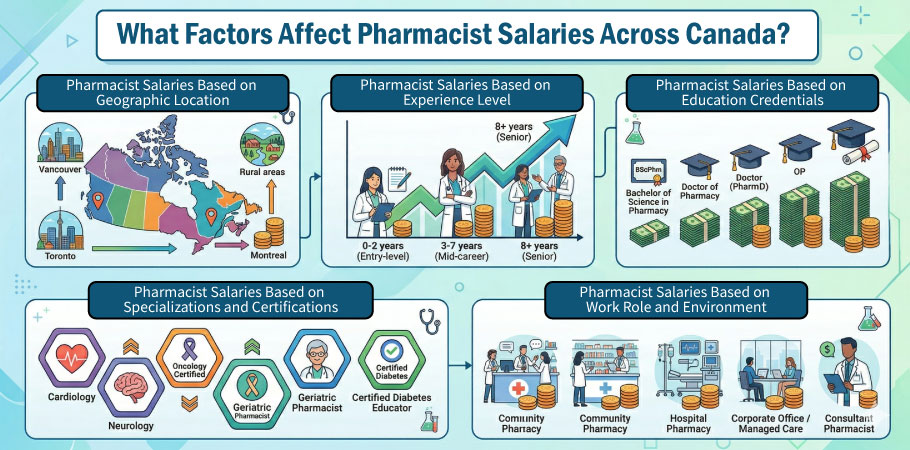
What Factors Affect Pharmacist Salaries Across Canada?
There are five key factors that create significant differences in pharmacist salaries across Canada, including location, experience, education, specializations and work role. So, gaining a strong understanding of these variables is essential for any pharmacist looking to maximize their income potential throughout their career.
Pharmacist Salaries Based on Geographic Location
Where pharmacists choose to practice in Canada substantially influences their earning potential. Major urban cities such as Toronto, Vancouver, Calgary, and Montreal tend to offer the highest base salaries for pharmacists to help offset elevated living costs.
Conversely, rural and remote regions of the country often struggle more with recruitment. As a result, they may offer incentives like signing bonuses, loan forgiveness programs, subsidized housing, and moving stipends to attract pharmacists. However, the base salary in rural areas may still be 10-20% lower than in major cities.
Pharmacist Salaries Based on Experience Level
A pharmacist’s years of experience dramatically impact their salary potential. Those who can demonstrate extensive expertise and specialized skills gained through many years of practice are better positioned to demand higher compensation from employers.
The following represents the average pharmacist salary in Canada, broken down by experience.
| Experience Level | Average Annual Salary Range (CAD) | Average Hourly Wage (CAD) |
| Entry-Level (0-2 years) | $70,000 – $85,000 | $35 – $40 |
| Mid-Career (5-10 years) | $95,000 – $110,000 | $42 – $48 |
| Senior/Experienced (10+ years) | $100,000 – $125,000+ | $52 – $62+ |
Source: Pharmacist Salary in Canada in 2025: How Much Can You Earn – eliteexpertise.com
That said, the more experience a pharmacist has, the more they can earn. With time, many pharmacists move into roles with more responsibility, such as manager or special areas like oncology or clinical care. Obviously, these roles usually come with higher pay and stronger job security.
Pharmacist Salaries Based on Education Credentials
Pursuing education above and beyond the minimum requirements to become a licensed pharmacist can also boost earning power:
- Completing a Master’s degree in a specialty like Pharmaceutical Sciences or Pharmacology can increase salaries by 15-20%.
- Earning coveted certifications like the Board Certified Pharmacotherapy Specialist (BCPS) credential signals advanced expertise to employers.
- Residencies, clinical diplomas, and other training add capabilities that qualify for higher-paying roles.
Pharmacist Salaries Based on Specializations and Certifications
Focusing on a specific area like oncology, geriatric care, or pediatrics shows that pharmacists have advanced skills in managing medications for those groups. Getting certified in these areas prepares pharmacists for high-paying jobs in clinics and hospitals.
For instance, a Certified Geriatric Pharmacist can earn 20% more than a general retail pharmacist, averaging around $125,000 annually with experience.
Pharmacist Salaries Based on Work Role and Environment
The type of employer also impacts a pharmacist’s salary potential. According to data, pharmacists in public sector roles earn an average of approximately 6% higher salaries.
| Pharmacist Job Title | Average Annual Salary |
| Retail Pharmacist | $104,786 per year |
| Pharmacist Manager | $127,289 per year |
| Clinical Pharmacist | $123,630 per year |
| Hospital Pharmacist | $112,609 per year |
| Pharmacist Assistant | $45,240 per year |
By understanding how these diverse factors influence income, pharmacists can make informed career moves to maximize their salary potential.
What are the Highest Paying Provinces and Cities for Pharmacists in Canada?

Significant regional variations emerge when examining average pharmacist salaries across Canada. Certain provinces and metropolitan areas offer the highest pay to attract top talent in this high-demand profession.
The remote northern regions of Canada currently offer some of the most lucrative pharmacist salaries to incentivize recruitment:
| Nunavut | $151,809 per year |
| Northwest Territories | $147,402 per year |
| Yukon | $125,063 per year |
These sparsely populated territories struggle to attract healthcare professionals and compete for talent by offering Canada’s highest pharmacist pay.
Other top-paying provinces include:
| Alberta | $114,227 per year |
| Quebec | $114,511 per year |
| Ontario | $103,647 per year |
Alberta and Quebec’s high demand for pharmacists and relatively high living costs explain their competitive salaries.
Looking at specific cities and metro regions, the highest pharmacist salaries are concentrated in western Canada’s urban centers:
| Calgary, AB | $121,981 per year |
| Edmonton, AB | $121,012 per year |
| Saskatoon, SK | $119,728 per year |
| Victoria, BC | $119,739 per year |
| Winnipeg, MB | $120,085 per year |
Calgary and Edmonton offer pharmacists over $120,000 per year to attract talent. Cities like Saskatoon, Victoria, and Winnipeg also hover close to $120,000, demonstrating the demand.
In comparison, major eastern cities pay slightly less on average:
| Toronto, ON | $106,970 per year |
| Ottawa, ON | $120,734 per year |
| Montreal, QC | $114,511 per year |
In summary, Canada’s rural and northern regions pay the most to incentivize pharmacists to practice in remote areas with staff shortages. Meanwhile, urban centers with high costs of living, especially in western provinces, also offer competitive salaries.
Source: Average Salary for Pharmacists in Canada – Indeed.com
How to Become a Pharmacist in Canada?
Becoming a licensed pharmacist in Canada involves education, examinations, practical experience, and provincial licensure. Follow these key steps to start your pharmacy career:
- Complete a University Science Program: Aspiring pharmacists typically need at least two years of undergraduate study in a science program.
- Earn a Pharmacy Degree: You must graduate from one of Canada’s 11 universities offering a pharmacy program. The degree is typically a Doctor of Pharmacy (PharmD), which takes four years to complete.
- Pass the National Board Exam: Graduates must pass the qualifying examination administered by the Pharmacy Examining Board of Canada (PEBC), which includes a multiple-choice section and an Objective Structured Clinical Examination (OSCE).
- Gain Practical Experience: All provinces require practical experience through an internship or apprenticeship program.
- Obtain Provincial Licensure: Pharmacy is regulated at the provincial level, so you must register with the pharmacy regulatory authority in the province where you intend to work.
For international pharmacy graduates, the process involves having credentials evaluated by the PEBC and enrolling in the Pharmacists’ Gateway Canada program as a first step for licensure in most provinces.
How to Negotiate a Higher Salary as a Pharmacist in Canada?
To negotiate a higher salary as a pharmacist in Canada, you need to prepare and plan. Start by researching the average pay in the industry. Focus on your special skills and show how they match what the employer needs. Also, think about other benefits you might want.

Using these strategies helps you maximize your total compensation and confidently advocate for your value.
Research Industry Standards
Leverage online salary databases like Neuvoo, Indeed, or Glassdoor to research typical pay ranges for your role, experience level, and geographic region. This data equips you to benchmark competitive salaries.
Highlight Specialized Skills
Demonstrate how your niche expertise, certifications (e.g. BCPS), and experience make you a uniquely valuable candidate. Provide concrete examples where you applied specialized skills or training to benefit patients and employers.
Align Skills to Employer Needs
Discuss how your specific competencies and accomplishments directly align with the employer’s needs. Link your abilities to the particular problems the pharmacy needs to solve. Showcasing this fit builds leverage.
Consider Alternative Benefits
If the employer cannot meet your desired base salary, negotiate for other meaningful benefits like:
- Professional development funding for conferences and courses
- Flexible scheduling options
- Additional vacation time or personal days
- Signing bonuses or annual performance bonuses
- Early salary review dates to reassess compensation
- Commuting stipends or transportation benefits
- Tuition reimbursement for advanced pharmacy degrees
These alternatives provide tangible value if base salary increases are not feasible initially.
With preparation and strategic focus on your specialized expertise, pharmacists can negotiate optimal compensation packages.
Curious about other professions' salaries in Canada? Learn more here:
Average Software Developer Salaries in Canada
Average Engineer Salaries in Canada
Average Registered Nurse Salaries in Canada
Average Lawyer Salaries in Canada
Average Veterinarian Salaries in Canada
Average Electrician Salaries in Canada
A career as a pharmacist in Canada promises strong job prospects and competitive salaries. While average pharmacist pay varies regionally, those who proactively gain experience, pursue specializations, and negotiate skillfully can maximize their earning potential.
We hope this guide provided helpful insights into the salary landscape for pharmacy professionals. Contact us if you have any other questions about launching or advancing your pharmacist career in Canada.
FAQs about Average Pharmacist Salaries in Canada
Here are the FAQs related to the average pharmacist salaries in Canada:
Why do pharmacist salaries vary so much across Canada?
Key factors like geographic location, years of experience, specializations, education credentials, and public vs private sector explain the large variances in pharmacist pay across different provinces and cities in Canada.
What can pharmacists do to increase their salary potential?
Pursuing specializations, advanced certifications, leadership roles, and negotiating skillfully provide clear paths for pharmacists to maximize their earning potential over the course of their careers.
Can international pharmacists work in Canada?
Yes, international pharmacists can work in Canada after completing the PEBC licensing process, which includes document evaluation, qualifying exams, and provincial registration.
Do male and female pharmacists earn the same salary?
No, a gender pay gap exists with male pharmacists earning 4-7% more than female pharmacists (males average CAD 157,600 vs females CAD 146,900).
Is pharmacy still in demand in Canada?
Yes, Canada's Job Bank projects steady demand through 2031 with 16,100 job openings expected, driven by an aging population and expanding healthcare needs.
Is $85,000 CAD a good salary in Canada?
For pharmacists, CAD 85,000 is slightly below the entry-level average of CAD 86,100. However, it's still above Canada's national median salary of CAD 62,400, making it a decent starting salary with room for growth.
Can a pharmacist make 200k in Canada?
Yes, pharmacists can make over CAD 200,000 in Canada. Senior pharmacists with 15-20 years of experience earn CAD 206,700, while specialized roles like Associate Medical Affairs Director can reach CAD 254,400 annually.
